
Conference Sessions and Consortium
Seven independent institutions. One great conference!
Conference Sessions
All 28 concurrent sessions across three days. Click any session title to jump to its spot in the schedule, or click the time/location badge on each card to return here from the schedule.
Wednesday, June 10, 2026
11:00 AM – 12:00 PM · Claremont McKenna College · RDSC
Session 1: The Autonomous Shift: Understanding Agentic AI and Safeguarding the Modern Campus
Jason Blunk (Earlham College), Colleen Tkach, Liam Cornell (Claremont McKenna College)
RDSC · McElwee Forum
As higher education shifts from task-based systems to autonomous agentic AI, institutions must move beyond generic security to AI-specific deployment architectures. This session explores the evolution of AI—from traditional models to those capable of independent decision-making—and the emerging threats like prompt injection that target them. We will introduce a risk-tiered "AI Vendor Vetting Blueprint" designed for FERPA, GLBA, and NIST compliance, providing a 5-step procurement framework to safely integrate AI while protecting student trust and institutional data.
Session 2: Maintaining Integrity in Testing: How CMC Is Confirming That Testing Isn't Taken Over By AI
Michael Malsed (Claremont McKenna College)
CMC · RDSC 131
With the prevalence of AI available to students, faculty have been looking for testing solutions that keep students in the class, in the exam, and in the moment. Claremont McKenna College has been using one solution and is implementing a second solution for these very purposes. Electronic BlueBook has been our solution for 4 years and we are in the early stages of bringing in Prospectus LockDown Browser. Learn from our victories and hurdles.
Session 3: Building a Staff AI Literacy Certificate Program
Don Vosburg (Carleton College)
CMC · RDSC 133
Faculty-focused AI initiatives are well underway at many institutions, but many staff across our campuses are already navigating generative AI in their daily work, sometimes without structured training, shared vocabulary, or clear guidelines. Liberal arts colleges face particular challenges: small teams wear many hats, professional development resources might be limited, and staff roles vary widely in how they intersect with AI. This presentation shares how Carleton College designed a Critical AI Literacy certificate program for staff, from initial framework through session-level design, with its first cohort launching after this conference. Rather than a polished retrospective, this is a look at an in-progress effort: the decisions we made, the trade-offs we navigated, and the questions we're still figuring out. Attendees will see how we grounded our framework in institutional values and structured a certificate program that attempts to balance practical skill-building with critical and ethical engagement.
Session 4: Data Strategy Journey: Storing, Understanding, Unleashing
Kelli Van Wasshenova, Ben Tryon, and Zane Buxton (Denison University)
CMC · RDSC 134
Last year, Denison launched a refreshed data governance initiative that evolved into something far more transformative: a central Data & Decision Support Team. By breaking down silos, we brought together data experts from Finance, Institutional Research, and ITS into a unified "team of teams." This session explores why we moved away from a policy-first approach to a change management model that prioritizes community value. We will detail our dual-track strategy: a bottom-up approach that utilizes undergraduate student internships and project-based delivery, paired with top-down strategic alignment. Attendees will learn how we have been building a "data-curious" culture through community wins while formalizing data governance, improving analytics, and modernizing our data ecosystem.
1:30 PM – 2:30 PM · Pomona College — Estella Building
Session 5: Building a Digital Campus Management Framework from Scratch
Wesley Gordon (Trinity University)
Pomona · Estella 1021
How do you align a university's technology investments to its strategic plan when no governance structure exists to connect them? At Trinity University, the answer is Digital Campus Management (DCM)—a digital stewardship concept designed to make the institution's digital ecosystem fully integrated, intuitive, and resilient. Formally embedded as Initiative 3.4 of Trinity's "Ready Set Rise" strategic plan, DCM is a recently launched, university-wide governance framework organized across four strategic focus areas: Cybersecurity, Digital Experience, Enterprise Applications, and Data Governance. This session tells the practitioner story of building DCM from the ground up, including a three-stage Crawl/Walk/Run change management strategy, a two-tier roadmap design, and a five-stage intake funnel. All framework artifacts will be available to attendees for direct adaptation.
Session 6: The Question That Changed Everything
Jeremiah Tylutki (Hamilton College) and Ahmad Khazaee (Colgate University)
Pomona · Estella 1051
Reframing how small liberal arts technology teams think about capacity, automation, and doing more with less. This session examines how asking one pivotal question shifted the entire strategic direction of IT operations at two peer institutions, setting off a chain of decisions around automation, staffing, and what it means to lead a lean team in a resource-constrained environment.
Session 7: CLAC Annual Survey: Trends, Disambiguation, and What's Next
Zane W. Buxton (Denison University)
Pomona · Estella 1163
Come learn and discuss all things CLAC Annual Survey. This session will explore the latest trends emerging from the survey data, address common points of confusion and disambiguation in the results, and open a community conversation about where the survey is headed. A must-attend for anyone interested in benchmarking and data-driven decision making across CLAC institutions.
Session 8: Building AI Literacy at a Small Liberal Arts College Through Staff Communities of Practice
Elizabeth Hodas and Yi Luo (Harvey Mudd College)
Pomona · Estella 1181
As generative AI technologies increasingly influence higher education, institutions must support staff in developing practical AI literacy while encouraging thoughtful and responsible adoption. At Harvey Mudd College, the CIS department developed two professional development initiatives—Summer of Curiosity: AI and the ongoing AI Dip series—to provide structured, low-barrier opportunities for staff collaborative learning and experimentation. Summer of Curiosity consisted of weekly 90-minute peer experience-sharing sessions including topics such as using Microsoft Copilot and writing effective prompts, forming a continuing learning community of 22 staff members. The bi-weekly AI Dip series begins with a lightning presentation on a targeted AI topic, followed by open discussion. This session will share the design rationale, facilitation strategies, participation patterns, and lessons learned from both initiatives.
Session 9: Brushstrokes of Change: A Collaborative Transition from Sakai to Canvas & In the Messy Middle: A Case Study in LMS Transition
Stephanie Friedman (Mt. Holyoke), Benjamin Royas (Claremont McKenna College), Steve Anderson (Pitzer College), Christine Gao (Scripps College), Nick Weber (Pomona College)
Pomona · Estella 1249
For nearly 20 years, the Claremont Colleges shared a singular, self-hosted installation of Sakai LMS. Starting in fall 2023 each individual campus began a slow, measured process of onboarding faculty to Canvas LMS while also assisting with importing existing Sakai course materials. This panel from IT support staff at CMC, Pitzer, Scripps, and Pomona will discuss challenges and best practices learned throughout this multi-year transition. Paired with a case study from Mount Holyoke College—preparing for a Fall 2026 broad Canvas launch—sharing lessons learned from more than a year of preparation, planning, and pilots.
3:00 PM – 4:00 PM · Pomona College — Estella Building
Session 10: Behind the Curtain: The Wicked Truth About Campus AI Collaboration
Susan Purrington and Matt Gardzina (Connecticut College)
Pomona · Estella 1021
What happens when an AI fellow and a VP of IS walk into a three-year initiative together? At Connecticut College, the answer involved faculty courage, wicked problems, unexpected collaborators, and more than a few flying monkeys. In this session, we take an honest, behind-the-curtain look at the design and implementation of AI@Conn, a campus-wide initiative to integrate artificial intelligence into the liberal arts. Drawing on two years of experience designing, implementing, and evaluating the initiative, we will share what worked, what proved genuinely wicked, and what was ugly but essential to acknowledge—particularly at a small liberal arts college where institutional values and the rapid pace of AI change do not always move in the same direction.
Session 11: From vCISO to Institutional CISO: Building a Sustainable Cybersecurity Program
Andrew Crawford (Pomona College) and Daniel M. Briley (Aldrich Solutions LLC)
Pomona · Estella 1051
CLAC schools face similar cybersecurity pressures as companies—regulatory compliance, vendor risk, and evolving threat landscapes—without comparable staffing or resources. This session explores a five-year journey between Pomona College and Summit Security (now Aldrich Solutions), a cybersecurity consulting partner that began as a virtual CISO (vCISO) engagement and evolved into a mature, internally led cybersecurity program. Co-presented by Pomona College's CISO and Aldrich Solutions' VP of Cyber Risk Services, the session shares how recurring risk assessments, penetration testing, regulatory reviews (GLBA, PCI), POAM-driven planning, and vendor risk management practices helped raise cybersecurity maturity over time. Attendees will gain practical insights into structuring external cybersecurity partnerships that promote capability building rather than dependency.
Session 12: The Power of "Yes": Reframing IT as a Catalyst for Growth
Martha Hunyadi, Sarah Blakemore, and Katie Himmelrick (Claremont McKenna College)
Pomona · Estella 1163
By adopting the psychological and collaborative power of "Yes, And," IT teams can dismantle the barriers that lead to Shadow IT and build "trust equity" with their colleagues. The session provides a practical framework—including the "Yes, If" Matrix—to show that saying "yes" to a partnership doesn't mean compromising on security or budget. Instead, it ensures IT has a seat at the table from the start, transforming technical experts from policy police into essential innovators who align technology with the organization's strategic goals.
Session 13: Title II Accessibility (WCAG 2.1 AA): Tackling in Bite-sized Chunks
Nathan Stazewski (Pomona College)
Pomona · Estella 1181
Pomona College has been working through Web Content Accessibility Guidelines (WCAG) 2 AA since 2017. With the newer 2.1 guidelines being incorporated into Title II, there have been a lot of questions about how to meet compliance. Learn how Pomona College has utilized Siteimprove, manual verification, internal policies, and strategic coding practices to get their Siteimprove accessibility score into the 90s for compliance with WCAG 2.1 AA and Accessible Rich Internet Applications (ARIA) best practices.
Session 14: CLAC GPT: Governance, People, Trust
Barron Koralesky & Tattiya Maruco (Williams College), Janet Scannell (Carleton College), Liv Gjestvang (Denison University), Michael Cato (Bowdoin College)
Pomona · Estella 1249
Join colleagues from four CLAC institutions as they share their AI governance and committee journeys. We will move from institutional overviews to a candid discussion with attendees, focusing on crowdsourcing solutions to the shared challenges facing our institutions. This collaborative panel format is designed to surface practical strategies for building AI governance structures that reflect the values and constraints of small liberal arts colleges.
Thursday, June 11, 2026
9:00 AM – 10:30 AM · Harvey Mudd College · Shanahan Hall
Session 15: Building Security-Focused Momentum in IT at a Small College
Peter Zillmann (Kalamazoo College) and Shane Albright (REN-ISAC)
HMC · Shanahan 3460
Kalamazoo College has only one FTE dedicated to information security and a workload and backlog much greater than one person can handle. Kalamazoo College partnered with REN-ISAC to participate in their Information Security Kickstart program. This presentation will describe how a facilitated training engagement helped Kalamazoo College get buy-in from IT colleagues to move closer to a security by default, privacy by design mindset and plan.
Session 16: Nobody Told Us This Was Part of the Job: The Most Important Technology in the Room Is You
Nick Roberts (Davidson College) and Cory Baden (Rollins College)
HMC · Shanahan 3481
Nobody handed us a manual on how to command a room, write an email a VP would actually read, or use AI without sounding like everyone else. And yet communication has become one of the most consequential skills in the IT leader's toolkit. Two higher education technology leaders share a practical framework for writing with intent, presenting with clarity, and using AI without losing your voice. Not a soft-skills pep talk—real frameworks, no fluff. (Maybe a little fluff.)
11:00 AM – 12:00 PM · Harvey Mudd College · Shanahan Hall
Session 17: Integrating Research Computing into a Consortium-First IT Model
Jeho Park, Daniel Perez, and Vanessa Arias Casillas (Claremont McKenna College)
HMC · Shanahan 3460
As data-intensive research, artificial intelligence, and machine learning expand across disciplines, demand for research computing support is growing at liberal arts institutions. These emerging needs introduce both challenges and opportunities in coordinating access to advanced computing resources in ways that leverage existing consortium IT environments to better support faculty and student researchers. Drawing on experiences from The Claremont Colleges, this presentation explores how research computing services—including consultation workflows, faculty and student training, and partnerships with regional high-performance computing (HPC) centers—can be aligned with consortium-wide infrastructure and collaboration models.
Session 18: High-Value Use Cases: Where AI Can Actually Move the Needle
Zach Sherwin and Penny Evans-Plants (Berry College)
HMC · Shanahan 3481
This session centers on identifying and stress-testing AI use cases that deliver real value at the kind of scale a small liberal arts institution can handle. The paradigms of partnership, internal development, and user enablement will be explored and contextualized for attendees to reflect on and apply within their own institutional context. Move beyond hype to discover where AI genuinely moves the needle for lean IT teams.
Session 19: After April 24th: How Are CLAC Institutions Navigating ADA Digital Accessibility
Don Vosburg (Carleton College)
HMC · Shanahan 3485
On April 24th, 2026, the Department of Justice's final rule under ADA Title II took effect, requiring public institutions to ensure all web content, mobile applications, and digital materials conform to WCAG 2.1 Level AA standards. Although this directly targets Title II (public) entities, its ripple effects are reshaping digital accessibility expectations across all of higher education. This informational session, facilitated by members of the CLAC UDL/A11y affinity group, invites cross-institutional conversation about how liberal arts colleges are interpreting and responding to these changes. Participants will share their institution's approach, exchange practical strategies, and learn from one another's successes and challenges. This session will run concurrently in person and virtually.
Session 20: A 10-Year Reflection of Moving Degrees Online and Unexpected Benefits Claremont-wide
Michael Thomas (Claremont Graduate University)
HMC · Shanahan B480
In 2016, Claremont Graduate University broke from the mold of on-campus education to enter the unknown space of online teaching and learning through an initial 3-degree offering. This presentation will discuss the experience of that novel approach, the immediate pivots required, the stark learning curve and challenges to personal and institutional cultures, and the long-term impacts that have positively prepared the university to where it finds itself today—not only thriving through a pandemic but also assisting its peer consortium institutions through that experience and helping them adopt their own paths forward, including transitioning uniformly to the same LMS.
1:30 PM – 2:30 PM · Pitzer College · Bernard & Fletcher Halls
Session 21: Filling Chairs, Choosing Songs: Navigating Leadership Turnover in ERP Implementations
Melissa Cresswell (Bryn Mawr College) and Eric Hoffman (Moran Technology Consulting)
Pitzer · Bernard 105
What happens when the music stops but the project must go on? At Bryn Mawr College, a multi-year Workday implementation became a masterclass in institutional resilience when the project team navigated no fewer than eight college leadership changes. This dynamic, interactive workshop brings together institutional and consulting perspectives to explore the complexities of staffing and resourcing large-scale projects in the small liberal arts college environment. Participants will move beyond theory into practical application, exploring the pros and cons of various staffing approaches—internal, external, and hybrid—tailored to their own institutional constraints. Whether you are currently facing leadership turnover or planning an enterprise migration, you will leave with a toolkit for managing stakeholder transitions, onboarding sponsors quickly, and ensuring your project remains on track.
Session 22: Putting the Fun in Cybersecurity: Designing Awareness Programs People Actually Remember
Jessica Carter (Pitzer College) and Daniel M. Briley (Aldrich Solutions LLC)
Pitzer · Bernard 111
Cybersecurity awareness programs often fail not because the content is wrong, but because the delivery never connects. This session explores how intentionally designed fun can be a serious tool for improving security outcomes. Drawing on real-world experience building campus-wide cybersecurity awareness programs, the speaker demonstrates how creativity, humor, and storytelling can drive engagement without minimizing risk or compliance requirements. Participants will learn how to reframe cybersecurity from a purely technical obligation into a shared responsibility that people understand, remember, and act on.
Session 23: Twin Ambitions: Scaling Our Leadership Through Custom GPTs
Michael Cato (Bowdoin College) and Barron Koralesky (Williams College)
Pitzer · Fletcher 104
What happens when a CIO stops using AI as a search engine and starts using it as a "grounded partner"? This interactive workshop explores the creation and evolution of specialized "Digital Twin" GPTs, built using Carnegie Mellon's FRED framework (Focus, Role, Evidence, Delivery). These tools act as vigilant mirrors for a leader's unique style. The session moves past the technical "how-to" to discuss practical and philosophical lessons learned from bringing leaders through the creation process. Attendees will learn how providing AI with "evidence"—from core leadership philosophies to assessment data like CliftonStrengths—transforms generic AI into a strategic thinking partner.
Session 24: Insights and Lessons from a Year of Penetration Testing
Kyle Enlow (REN-ISAC, Indiana University)
Pitzer · Fletcher 110
Penetration testing is a critical element of a mature information security program, yet it is often misunderstood or treated as interchangeable with vulnerability scanning. This presentation shares practical insights and lessons learned from a year of delivering penetration testing services within higher education environments. The session clarifies the differences between vulnerability scans and penetration tests, discusses what makes an effective penetration tester, and addresses common challenges encountered during pre-engagement planning. Attendees will gain insight into recurring attack paths and systemic weaknesses, with emphasis on actionable mitigation strategies, assumed-breach testing models, and the risks posed by rogue or shadow IT.
Session 25: Peer Coaching for Real Challenges: Human-Centered Problem Solving
Liv Gjestvang (Denison University)
Pitzer · Fletcher 112
Constant change, growing workloads, and pressure to lead without clear direction are shaping the experience at many of our institutions. In a field often centered on tools and systems, our most complex challenges require something else: space to think, perspective from others, and the ability to work through uncertainty together. This interactive session introduces a practical, human-centered problem-solving model. Participants will engage in a fast-paced, structured peer coaching process to work through real, current challenges during the session—and will leave with a concrete action plan and a community for ongoing support.
2:30 PM – 3:30 PM · Pitzer College · Bernard & Fletcher Halls
Session 26: AI for All: Fostering AI Literacy Among Faculty, Staff, and Students
David O'Steen (Wellesley College)
Pitzer · Bernard 105
How can a small institution best address the crucial need to build literacy and ensure informed, secure, and responsible AI use by all campus constituencies? This session shares a variety of training models including AI administrative department roadshows and popup events for students. Successful event types will be shared, including Faculty Unconferences and student panels in partnership with the learning and teaching center on topics such as AI Across the Curriculum. The session also explores the challenge of balancing equitable access and privacy through the various LLM platforms Wellesley supports, including Google Gemini, NotebookLM, LibreChat, Pangram, and embedded tools such as Zoom's AI Companion.
Session 27: Practical AI for IT Operations and Project Management
Joanie Bauman (Denison University)
Pitzer · Bernard 111
IT leaders and project management offices at liberal arts institutions often balance strategic initiatives with significant operational and administrative responsibilities. Recurring tasks such as project intake, portfolio reporting, executive updates, documentation, and status reporting can consume valuable time and limit capacity for higher-value strategic work. This session explores practical ways artificial intelligence can help streamline these functions using familiar workplace productivity tools. Through real-world examples from IT operations and project management environments, participants will see how lightweight AI-supported workflows can improve efficiency, visibility, and communication—with attention to governance considerations and responsible AI use within higher education settings.
Session 28: From Pilot to Practice: Agentic AI in Liberal Arts IT
Nick Roberts (Davidson College) and Bill Thompson (Lafayette College)
Pitzer · Fletcher 104
Liberal arts colleges run lean IT shops. A handful of people cover everything from core infrastructure and cybersecurity to ERP systems, identity management, and end-user support, all while keeping pace with an accelerating technology landscape. Agentic AI poses a deceptively simple question: can a small team use it to do more, without cutting corners on quality, security, or judgment? This session is a candid, ground-level account from Lafayette College and Davidson College—walking through how they're deploying agentic AI across infrastructure and operations, security workflows, and IT service management. They'll share what they're building, what surprised them, what failed, and what responsible deployment actually looks like in a resource-constrained environment.
The City of Trees and PhDs
The Claremont Colleges are a consortium of five undergraduate liberal arts colleges and two graduate institutions. Located on contiguous campuses in Claremont, California, "The 7Cs" share central services including a library, health center, and campus safety, while maintaining their unique identities and missions.
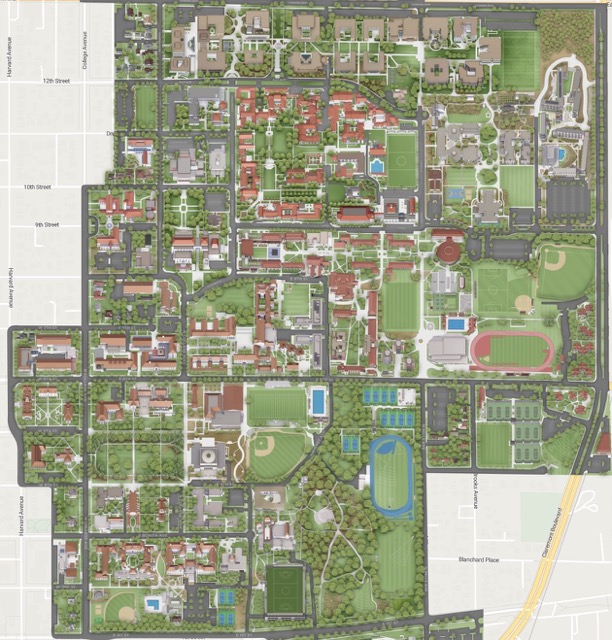
The Undergraduate Colleges
Claremont McKenna
Focus on economics, government, and public affairs. Led by its mission to prepare students for responsible leadership.
Pomona College
Founding member offering comprehensive curriculum across arts and sciences.
Scripps College
Top-ranked women's liberal arts college known for rigorous interdisciplinary core.
Harvey Mudd
Educates engineers, scientists, and mathematicians versed in humanities.
Pitzer College
Emphasizes environmental sustainability and intercultural understanding.