
About This Session
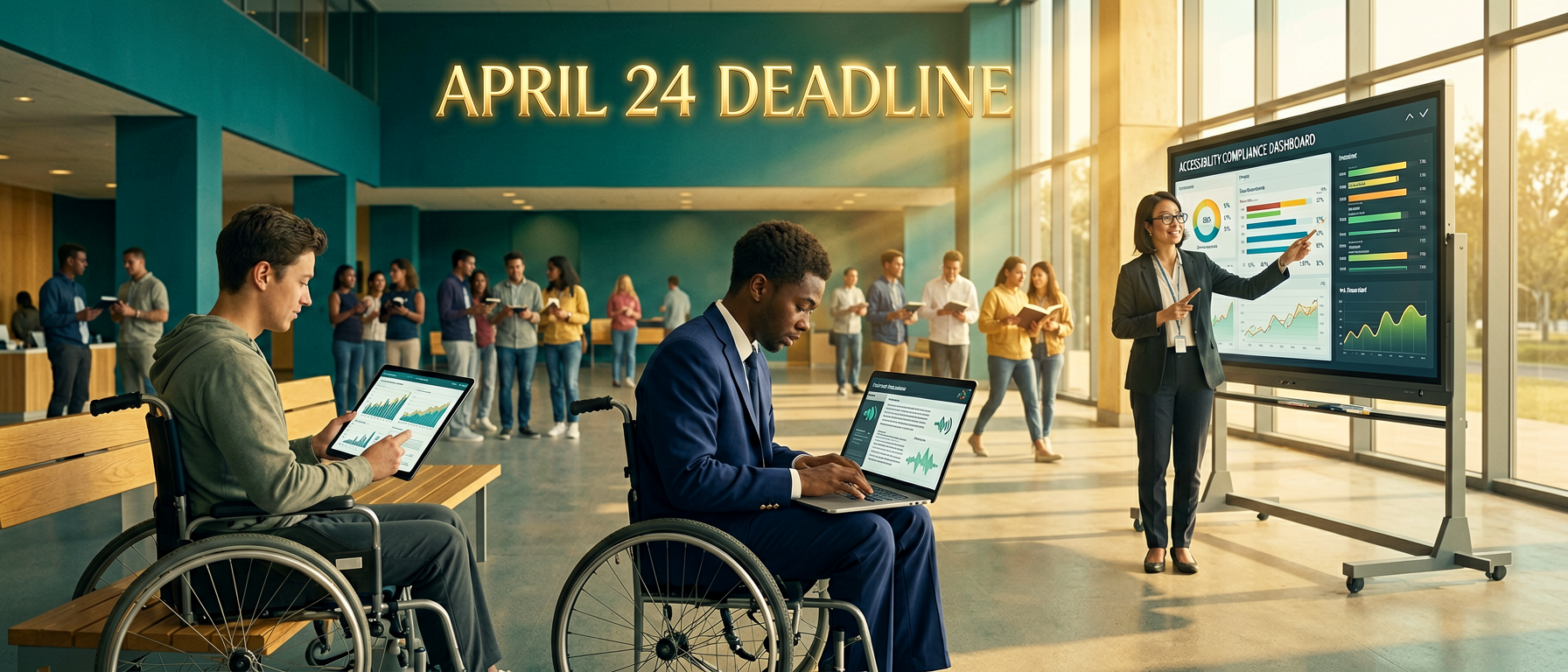
On April 24th, 2026, the Department of Justice's final rule under ADA Title II took effect — requiring public institutions to ensure all web content, mobile applications, and digital materials conform to WCAG 2.1 Level AA standards. Because this conference takes place in June, attendees will have the benefit of hindsight: a rare opportunity to share what actually happened, not just what was planned.
While Title II directly targets public (Title II) entities, its ripple effects are reshaping digital accessibility expectations across all of higher education — including private liberal arts colleges facing mounting litigation risks and a shifting cultural landscape.
Two Emerging Approaches
All Digital Materials
Some institutions are pursuing comprehensive compliance across all digital materials — including faculty-created content and internal course materials deemed "not public." High workload, high protection.
Public-Facing First
Others are focusing on public-facing web content and deferring internal course materials. Lower initial workload, but carries ongoing risk as expectations evolve.
Discussion Topics
- How institutions are interpreting their obligations under Title II and Title III
- How they are (or are not) engaging faculty in the accessibility process
- What tools and training they have deployed for staff, faculty, and content creators
- How third-party content and vendor accountability are being handled
- What role instructional designers, IT staff, and disability services professionals are playing
Learning Outcomes
- Evaluate your institution's current digital accessibility plan relative to approaches shared by peer institutions — identifying strengths and opportunities for improvement.
- Assess how peer institutions are allocating resources, engaging faculty and staff, and addressing course material accessibility.
- Return to your campus with at least one actionable strategy or framework shared by a peer institution to inform or refine your own accessibility planning.